Three sacred plants. Thousands of years of ceremony.
DYMZ brings together cannabis, Mimosa hostilis and Syrian rue, three plants honored for healing, prayer and protection across four continents. This page shares their stories, with respect and with care.
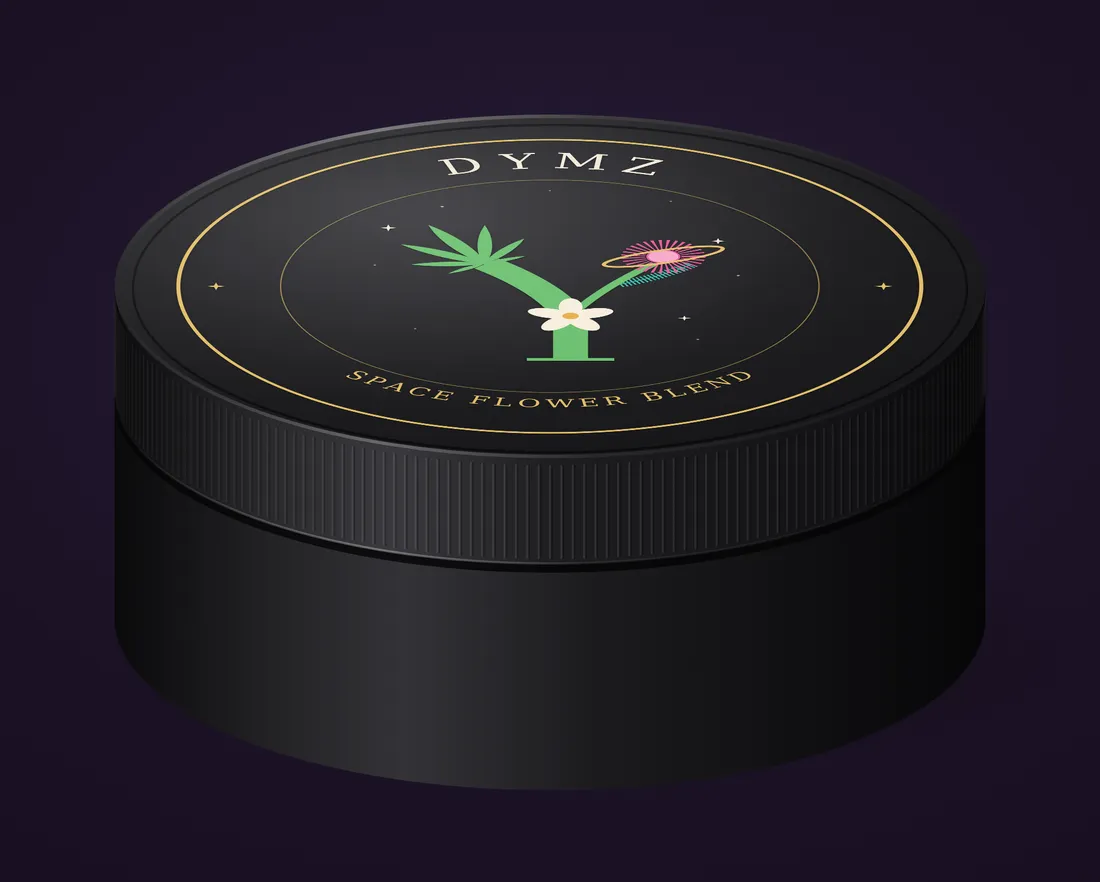
Cannabis, Mimosa hostilis and Syrian rue, woven into one sprouting Y.
I · THE THREE PLANTS
Where each plant comes from
Cannabis
The plant of the gods · Central Asia, India, Jamaica
Cannabis has been burned in sacred ceremony for at least 2,500 years. Wooden braziers from a tomb high in the Pamir Mountains still held residue of strong cannabis, burned on hot stones during funeral rites around 500 BCE.
In India it is one of five sacred plants in the Atharvaveda and is tied to Lord Shiva. Rastafari came to see ganja as a sacrament that opens reflection.
Believed to: honor the dead, quiet the mind for prayer, and bring people together.
Mimosa hostilis
Jurema preta, the sacred tree · Northeastern Brazil
Indigenous peoples of Brazil's dry backlands made a ceremonial drink, vinho da jurema, from its root bark. It was first written about in the 1700s, and its use is believed to be centuries older.
The ritual survived persecution and lives on in circle dances, chanting and the Afro-Indigenous faith of Catimbó-Jurema, where the tree's roots hold the "cities of jurema," home of the ancestor spirits.
Believed to: heal, reveal, connect people with their ancestors and their land.
Syrian rue
Esfand, the holy seed · Iran, Central Asia, North Africa
Its Persian name comes from the ancient word for "holy." For over a thousand years, families have dropped its seeds on glowing coals to ward off the evil eye at weddings, births and times of illness.
Some scholars believe it was haoma, the sacred drink Zoroastrian priests took to journey into the spirit realm. That theory is still debated.
Believed to: protect, cleanse a space and bring blessing to the home.
A modern story
These three plants were never combined in any ancient tradition. Smoking blends like this are new: the best known, changa, was created in Australia in 2003–2004 and spread through festivals worldwide after 2008.
DYMZ belongs to that young lineage, an old idea of plant partnership in a new form.
Honoring the roots
Jurema is still a sacred practice for Indigenous and Afro-Brazilian communities. Esfand is still burned in homes across Iran. We share their stories with gratitude.
Careless harvesting of mimosa root bark can kill trees and harm the forests where they grow. Choose ethical, sustainable sources that leave trees alive and pay harvesters fairly.
THE PARTNERSHIP
Why these three, together
Each plant plays a different part. Understanding those parts explains both why the blend works the way it does and why it asks for so much care.
THE VISION
Mimosa hostilis
Its root bark holds DMT, the visionary heart of the blend. On its own, the body breaks DMT down very quickly.
THE KEY
Syrian rue
Its harmala alkaloids are MAOIs (MAO inhibitors). They slow that breakdown, which deepens and lengthens the experience. It is the same partnership behind ayahuasca.
This is also the part that makes the safety rules so important.
THE ANCHOR
Cannabis
In DYMZ, cannabis is the steadying hand. In the founder’s own experience, it brings calm and focus at the same time, and makes each journey feel familiar and productive: new ideas, integration, repeat.
Experiences vary. Some people find cannabis makes DMT more intense and less predictable, and the harm-reduction group TripSit rates the pairing “caution.” Go gently, and keep a calm setting and a sober sitter close.
II · CEREMONY
Intention, setting & what comes after
Before
Every tradition treated these plants as ceremony, never as something casual. In that spirit:
Find a quiet, comfortable space and set it with love and intention.
Know what you hope to learn or release.
Have a trusted, sober person with you.
Clear your schedule, and never drive afterward.
After
What happens after the ceremony matters as much as the ceremony. This is called integration.
Rest, and write down what you saw and felt.
Talk it through with someone you trust before making big decisions.
Turn insights into small, practical steps, one habit at a time.
Feeling shaken? The Fireside Project offers free psychedelic support: call or text 62-FIRESIDE (623-473-7433), 11 a.m. to 11 p.m. Pacific.
III · WHAT WE KNOW
What people report, and what research says
People who work with these plants in ceremony often describe a quieter mind, a release of heavy emotions, deep awe and a fresh appreciation for life. Many say the experience helped them let go of old habits.
Science has started to look closely at those claims. Most of the research is on ayahuasca, the Amazonian brew that pairs DMT with an MAOI, the same partnership as jurema and Syrian rue. Here is what the studies found, the encouraging and the cautionary.
In the clinic
Controlled studies with screened patients, measured doses and medical supervision.
2015 · BRAZIL · 6 PATIENTS
A single dose for recurrent depression
In an open-label trial at a psychiatric hospital, one dose of ayahuasca cut depression scores by up to 82%, with improvements seen 1, 7 and 21 days later.
2016 · BRAZIL · 17 PATIENTS
Brain scans show mood regions responding
A follow-up study found fast drops in depression scores and more blood flow in brain areas that regulate mood and emotion. Vomiting was the only side effect, in 47% of volunteers.
2018 · BRAZIL · 29 PATIENTS
The first placebo-controlled trial
In this trial, people with treatment-resistant depression who drank ayahuasca improved more than those given a look-alike placebo, a week after one session.
2026 · UK · 34 PATIENTS
DMT alone, with lasting results
An Imperial College London trial in Nature Medicine gave pure DMT by IV with therapy. Depression eased more than with placebo, effects lasted 3 to 6 months for many, and there were no serious side effects.
In the real world
Surveys and field studies of people using these plants outside a hospital.
2021 · WORLDWIDE · 11,912 PEOPLE
The Global Ayahuasca Project
Among survey respondents with depression, 78% said it was "very much improved" or resolved; 70% said the same of anxiety. Only 2.7% and 4.5% said they got worse. People with good experiences may have been more likely to answer.
2012 · 127 USERS
Long-term ceremonial users
Compared with members of other religions over one year, regular ritual users scored lower on psychiatric symptoms, better on thinking tests, and higher on purpose in life, with no signs of harm or addiction.
2013 · CANADA · 12 PEOPLE
Breaking the hold of addiction
At retreats in a First Nations community that paired counselling with two ceremonies, hope, mindfulness and quality of life rose. Problem cocaine use fell significantly six months later, and alcohol and tobacco use dropped.
2019 · EUROPE · 42 PEOPLE
An inhaled tryptamine
After one inhaled session of 5-MeO-DMT, a close relative of DMT, life satisfaction rose and depression and stress fell, holding at four weeks. It is a different compound from the DMT in mimosa.
THE BOTTOM LINE
The DMT and MAOI pairing shows real promise for depression in early, small studies, and large surveys echo it. But those results came from clinics and guided ceremonies, with screening and support. No study has tested a smoked blend like this one, and nothing here is a proven treatment.
If you are living with depression, talk to a doctor or therapist first. You can call or text 988 any time.
PLEASE READ
Safety & warnings
Syrian rue is a powerful MAOI. It changes how your body breaks down many medicines and foods, and some combinations can be life-threatening. Speak with your doctor before you approach DYMZ.
Never combine with
SSRIs, SNRIs, MAOIs or other antidepressants. This can cause serotonin syndrome, which can be fatal. Never stop a prescribed medicine without your doctor.
Stimulants, including ADHD medicines, amphetamines, cocaine and MDMA.
Tramadol, dextromethorphan, St. John's wort and some cold and migraine medicines.
Other MAO-active herbs, such as passionflower, which contains small amounts of the same kind of alkaloids as Syrian rue.
Alcohol.
Watch your diet
Foods high in tyramine, such as aged cheese, cured meats, soy sauce and tap beer, can raise blood pressure dangerously while an MAOI is active.
Do not use if you
are pregnant or breastfeeding, have heart problems or high blood pressure, have a personal or family history of psychosis or bipolar disorder, or are under 21.
Call 911 for high fever, heavy sweating, muscle stiffness, a racing heart, chest pain, a sudden severe headache or confusion. The experience can feel intense and very real. You may feel like you've traveled to space. Never use alone.
Glossary
DMT
A naturally occurring psychedelic compound found in Mimosa hostilis root bark.
MAOI
Monoamine oxidase inhibitor: blocks the enzyme that breaks down DMT, certain medicines and some foods.
Beta-carbolines
The alkaloids in Syrian rue, mainly harmine and harmaline, that act as MAOIs.
Entheogen
A plant or substance used in a spiritual or religious setting.
Set and setting
Your mindset going in, and your surroundings. Both shape the experience.
Integration
Reflecting afterward and bringing what you learned into daily life.
Serotonin syndrome
A dangerous reaction to too much serotonin, often from mixing MAOIs with antidepressants.
Tyramine
A compound in aged and fermented foods that can spike blood pressure when an MAOI is active.